



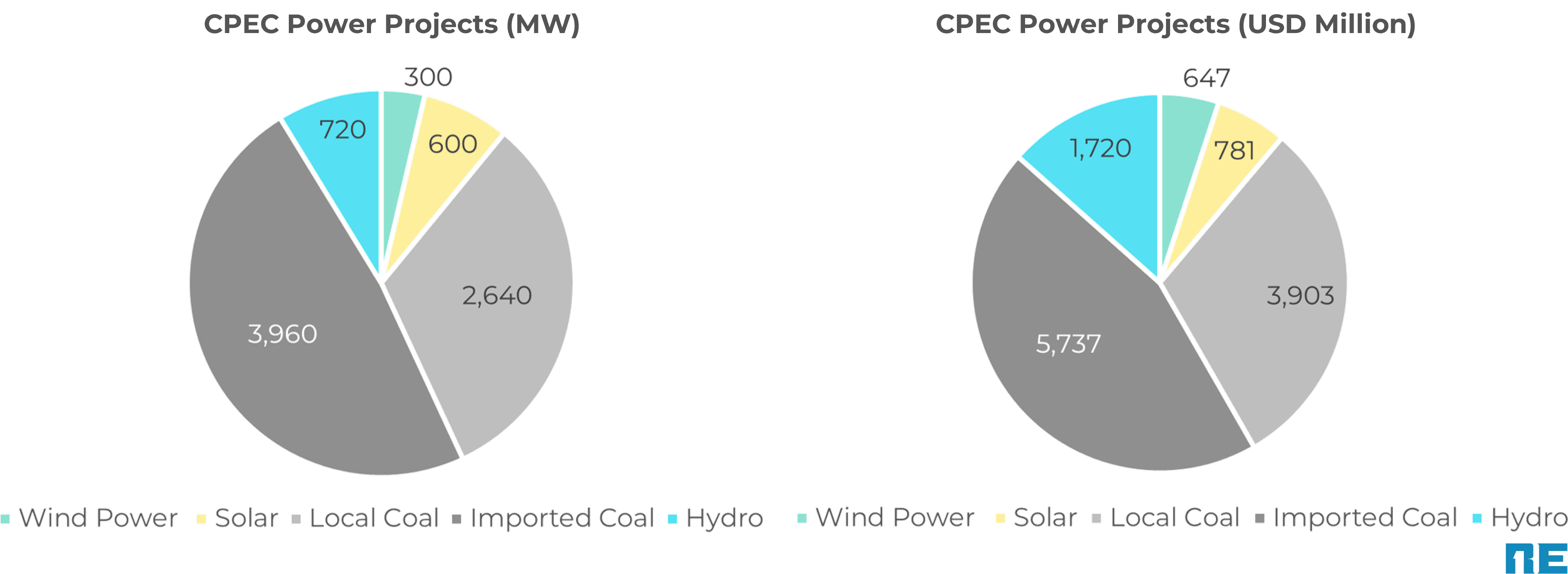
CPEC's first phase (2014-2020) directed USD 14.5 billion toward power generation with coal growing from 0.15 GW in 2015 to 7.2 GW by March 2023 and dominating 80.3% of the portfolio. This coal-heavy model has produced USD 10 billion in circular debt and over USD 1.5 billion in overdue payments to CPEC IPPs, making it fiscally unsustainable. This study makes the case for redirecting CPEC 2.0 toward renewables to address both Pakistan's economic crisis and its status as the fifth most climate-vulnerable nation globally. Renewables First simulations recommend 24 GW of wind and solar to achieve a 35% renewable share by 2030, requiring USD 52 billion in cumulative investment. Solar and wind tariffs at 4 US cents per kilowatt hour are far more viable than the current residential tariff of 21 cents per unit. China's 2021 overseas coal moratorium and its dominance in Pakistan's renewable market make a green CPEC pivot both strategic and immediately actionable.
.png)
.png)